Purification, Enrichment, and Utilization of Biogas

May 15th, 2012

Biogas Purification

The enrichment of biogas to the quality of natural gas through backwashing with pressurized water is the most flexible technology available for the treatment of biogas, regardless of quality and quantity.  This technology is used to enrich biogas and separate the carbon dioxide and hydrogen sulfide in a single step through a completely automated process of utmost efficiency.

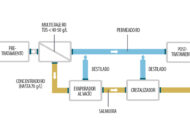
Biogas is compressed up to 7 bars and then washed in a countercurrent flow of water in a water scrubber.  Carbon dioxide and hydrogen sulfide have much greater water solubility than methane and will dissolve in water.

To reduce the loss of methane in the process, the wash water is transferred to an expansion tank.  A portion of the dissolved gases are re-gasified and compressed again.  In a desorption column, wash water is regenerated by separating carbon dioxide and hydrogen sulfide in a countercurrent air flow thereby reducing fresh water consumption to a minimum.  After cooling the wash water to low temperature it is reused in the water scrubber.  After the wash, clean biogas is dried, first in a coalescing filter and then in two parallel adsorption columns to low dew points.

The air from the desorption column is loaded with carbon dioxide, hydrogen sulfide, and traces of methane; therefore it must be treated to comply with emission standards through regenerative thermal oxidation (RTO conforms emissions to standards in accordance with the technical instructions of air quality of adaptable control regulations of every country).

Uses of Biogas

The majority of biogas plants are equipped with cogeneration facilities that produce electricity and heat. Sometimes, not all excess heat can be utilized, therefore biogas plants are not used to their full potential.  In these cases, the alternative is the production of biomethane that offers interesting economic variables.

Through the use of biogas enrichment technologies, CO is eliminated from the biogas very efficiently and biomethane is produced with a quality equivalent to that of natural gas (CH4 97-99%).  Additionally, biomethane is a renewable gas of high quality that can be injected directly into existing natural gas. Some of its uses are:

• Combustion in facilities located far away from production (combined cycle).
• Biogas for direct consumption in households or industry.
• Biofuels for vehicles.
• Green energy.

Advantages of Biogas Enrichment

• Plants are made in standard modules with different capacities and are easy to implement.
• CO is removed from the biogas through scrubber technology using pressurized water.
• No chemicals products are consumed.
• No prior desulfurization is required.
• No heat demand.
• 99% recovery efficiency of methane.
• High flexibility despite the variations of CH4 content.

Source:

Power generation , , , , , ,

Crystallization Systems, Drying & Inerting Industrial Liquid Waste: Zero Liquid Discharge

May 9th, 2012

When treating industrial liquid waste, the hope is to achieve zero liquid discharge. This signifies that the treatment or purification process produces no liquid discharge. Good quality water is normally obtained that can be reused in factory processes, in addition to a solid residue which is usually recoverable for internal / external marketing or fuel. When it cannot be reused due to lack of value it can be transferred to a landfill.

Some of the processes that directly affect obtaining zero liquid discharge are crystallization, thermal drying and liquid stabilization.

Normally, in order to achieve such results, a concentrated pre-trial stage is required. It consists of using high-energy efficient vacuum evaporators to obtain a concentrated effluent (brine), which will be subsequently minimized by one of the fore mentioned technologies.

Crystallization

Crystallization generates solid crystals that are separated from a solvent (normally water). Industrial crystallization essentially consists of temporarily obtaining super saturation of a solute above equilibrium, which is the driving force of the process. This can be achieved by re-concentrating the solute by evaporation of a solvent, cooling the solution or by action of the other chemical product that is added to the solution to decrease the solubility of the original solute, or even a combination of all three processes.

Crystallization also verifies different substantial stages that are distinguished from super saturation in addition to marking the kinetics of crystal formation and their size. Acting on temperature, agitation and time, it is possible to obtain very thin or thick crystals using this pattern.

Evaporative crystallizers work by use of a vacuum, evaporating water at a reduced temperature (35-80 ° C).  Water is condensed and reused as distilled water. The evaporation vessel is configured with a heating jacket system, where the heating fluid (steam, hot water, thermal fluid) circulates. This special configuration achieves high concentrations in the chamber with the presence of solids without representing a problem for the process.

The outlet of the crystallizer normally requires the help of some final system for salt dehydration.

  • Centrifuge: This unit facilities batch dehydration of large quantities of crystals of all types of salts.
  • Drying Filter: the batch of mother liquor and salts is poured over a filter that drains the liquid that returns to the evapo-crystallizer header. Meanwhile, the salts are retained and separated by a traveling scraper that deposits them into a container.
  • Drainage Container: Follows the same procedure as above but its larger dimensions can treat greater quantities of crystallized salts.
  • Rotating Drum: Outer cylinder has a cooling jacket and a scraper that removes crystals that are deposited on the inner surface. The liquid to be crystalized comes from a concentrated phase of evaporation and is therefore hot. The cooling fluid can be water from a refrigeration circuit with an evaporation tower or refrigerated fluid that is kept at a very low temperature by means of industrial cooling equipment.
  • Decanting Reactor: This process utilizes previous evaporation to concentrate the solute but in the equilibration zone. Then, a dosage of a chemical specifically studied for each use, it may be another salt, a solvent, a polymer, etc. An imbalance occurs in original solution leading to the precipitation of crystals that are extracted from the reaction tanks by a specifically designed device. This process allows fractional crystallization and obtains different crystals separated from substances of high added value.

Spray Drying

Spray drying consists of spraying a solution rich in dissolved solids, not in suspension, in a chamber that is kept warm by the action of flue gases from a burner or hot air (180 to 400 °C).  Upon contact with the temperature, the solvent evaporates instantaneously and the solid precipitates in the bottom of the chamber. A venturi system permits the extraction of the dried solid and it’s separated from water vapor and cold combustion gases (approx. 100 °C) that are emitted to the outside. A filtering / washing process of the gases controls emissions into the atmosphere.

Because spray drying is a process that consumes a large amount of energy (kwt / liter evaporated), it is preferably used after an evaporation process to re-concentrate the solute and decrease the volume of water to evaporate. The solid obtained can be reused when possible or disposed in a controlled landfill.

Stabilization / Inerting

The stabilization of liquids is highly recommended when liquid waste management is very costly or impossible and when crystallization or spray drying cannot be utilized for technical or investment reasons.

Stabilization consists of mixing liquid waste or pasty residue, previously concentrated by an evaporator, with an inert, low cost material. Normally used for this purpose are clays, quicklime, slaked lime, cement, etc.  Some dehydrating polymers such as bentonite and sepiolite are commonly used. In some cases other solid waste can be utilized (e.g., sewage sludge, ash, slag, etc.).

The mixing process is done in batches or in continuous operation in a unit named BLENDER, which consists of a drum where the feeding liquid or slurry and the solid product stabilizer arrive separately. They are mixed to form a homogeneous mass and are discharged through the front opening to a container.

After a few hours the mix cements. As time passes it loses practically all its humidity, becoming solidified and inert. This product can be taken to a landfill without problem because it will never again dissolve.

The quantity of stabilized cementitious product per liter of liquid or paste depends on the type of residue but is normally between 0.8 and 2 liters of binder per liter of liquid waste or paste.

General , , , , , , ,

Electrocoagulation, an Economic and Effective Treatment for Wastewater

May 7th, 2012

Electrocoagulation is an alternative method for wastewater treatment. It consists of a destabilization process of water contaminants that are already in suspension, emulsified or dissolved by action of a low voltage, direct electric current and by the action of sacrificial metallic electrodes, usually aluminum or iron. Electrocoagulation is a compact device, which operates continuously, by means of a specially designed reactor where metal plates or metallic electrodes are placed to produce electrocoagulation. This process generates a high level of cations that destabilize residual pollutants from water, forming complex hydroxides, which are capable of adsorption producing aggregates (flocs) with contaminants. On the other hand, gas forms generating turbulence and pushes floc produced towards the surface.

Another phenomenal benefit of the electrocoagulation process is chemical oxidation that oxidizes metals and non-toxic pollutants as well as substantially degrading the COD / BOD.

Following the electrocoagulation process, waste an aqueous form composed of chemical species of iron bound to arsenic is obtained. This waste must be treated by conventional techniques to separate the most water possible and obtain an easy to manage byproduct with the least possible volume.

Electrocoagulation is a simple operation that requires relatively simple equipment. Because the flocs formed by electrocoagulation contain little surface water, are acid-resistant and are more stable, they can therefore more easily be separated by filtration. Moreover, it is a low-cost technology, which requires low investment and maintenance.

Besides being a technique for treating wastewater, electrocoagulation has also become a very interesting process to be utilized prior to reverse osmosis since it facilitates the process of desalination of water to be treated.

General , , , , ,

Wastewater and Effluent Treatment in the Metal Surface Treatment Industry

April 5th, 2012

The metal surfaces treatment industry is comprised of a large variety of activities whose purpose is to treat metal surfaces, protecting them from corrosion, improving their resistance to wear and erosion, or enhancing their appearances with metallic coatings.

These activities or treatments can be grouped into two main categories:


1. Cleaning processes and surface preparation (degreasing, pickling, …).
2. Metallic coatings and obtaining surface finishes (electroplating, anodizing, immersion, …).

During these treatment processes, large amounts of wastewater or effluents of diverse composition are generated according to the treatment the metal surfaces have undergone.

Different technologies exist for treatment of wastewater and effluents generated by the metal surface treatment industry. Treatment choice will depend on the composition of the effluents as well as the objectives and environmental needs of the company: zero liquid discharge, water reuse, adjustment of discharge limits, obtaining by-products, etc.

Vacuum evaporation is ideal for obtaining zero liquid discharge and can be used independently or in combination with membrane technologies.

Evaporation systems permit, among other applications, the concentration of rinse waters in a static wash. Firstly, the recovery of the trawl in a “concentrated” form is made possible. Secondly, a 95% rate of water is obtained that can be reused in rinse operations. Without this system, the utilization of static washes as recoveries would be very limited, thus requiring periodic emptying and subsequent discharge treatment.

Both crystallization and precipitation processes can be employed to obtain zero liquid discharge (treatment of evaporator rejections). They can be utilized for recuperating recoverable materials and for regenerating process solutions by eliminating impurities. They are applicable to any bath that presents any type of contamination of a salt with a metal, provided the polluted salts present a limited solubility.

Electrodialysis is a filtration system with a reduced operating cost, recovering between 80% and 90% of salts. Electrodialysis can be applied for the recovery of raw materials from process baths and for the regeneration of work baths free of ions.

Reverse osmosis produces water that can be returned in a closed circuit through a washing process. On the other hand, a concentration of nickel salts can be returned to process baths (90%-97%). Thus, nickel salts are saved in addition to other components of the bath such as rinse water. Reverse osmosis can be utilized in other processes such as brass, copper plating, silver, zinc, etc.

In addition, reverse osmosis can be employed in the regeneration of wash waters. Depending on flow rejections, with this system of reverse osmosis, one can obtain water between 100-500 μS/cm. This technique is applicable with diluted water from the majority of processes, with the exception of very oxidized baths.

Ion exchange resins permit the elimination of metal contaminants and the regeneration of rinse water, thus returning large amounts of high quality water with low ion content. This system returns the water to rinsing tanks through the design of the installation operating in a closed circuit. Recirculated rinses with ion exchange resins operating according to how they are intended, can work for a long time, with conductivities below 50 mS / cm, even below 5 mS / cm in the case of final rinses.

Metal , , , , , , , , , , ,

Elimination or Reduction of Odor Emissions in Industrial Activities

March 27th, 2012

The odors generated from industrial activates can pose both environmental and health problems, especially when emissions occur close to residential areas. The social demand for cleaner, odor-free air, has spurred the development of increasingly restrictive regulations concerning harmful gas emissions into the atmosphere. Thus, companies are obligated to seek solutions for gas purification and reduction of odors they emit.

The emission of unpleasant odors can come from a variety of industrial activities, although some industries are more likely to generate odors due to the “raw materials” with which they work. These industries include animal products, food, farming, chemical or waste management.

In many cases, unpleasant odors are not generated from the companies’ own activity, but rather from the waste generated in their production processes. In this sense, it is common to encounter problems with wastewater or contaminated sludge that is stored to be sent to treatment plants.

While necessary precautions are often observed in processes to help reduce and eliminate odors, in many cases, these measures can prove insufficient. Therefore, additional technology for odor reduction must be implemented.

Many different technologies exist to remove odors with air treatment to. The most suitable choice depends on diverse factors such as the nature of the pollutants, the amount or flow to be treated, and the concentration of emissions.

Regenerative thermal oxidation is a very efficient technology for removing VOCs and solvents. Depending on the concentration of VOCs to eliminate, energy consumption may be somewhat high. However, in return, the heat generated can be utilized. Regenerative thermal oxidation can utilized for varied flows between 2,000 and 150,000 Nm3 / h, with concentrations of VOCs ranging from 0.3 to 10 g/Nm3.

Activated carbon is a dry system that has limited effectiveness against small molecules such as ammonia, but it works very well for sporadic contamination. The carbon bed must be replaced frequently.

Scrubbers and washing towers are a good choice for high flow rates. However due to their complexities, these technologies require more maintenance by trained personnel.

Another system of purification to note is biological purification, or biofilters. These systems take advantage of the capacity of certain microorganisms to biochemically oxidize organic and inorganic substances that contain gases in need of treatment. In many cases, biofiltration is the most economic option while proving very effective. However, in many cases, this system can produce emissions that do not comply with permitted limits, due to the fact that not all pollutants are eliminated.

General , , , , , , ,

Wastewater Treatment and Zero Liquid Discharge in Mining

March 19th, 2012

A mine generates large amounts of highly concentrated wastewater due to contact between water and various types of minerals.  The origin of these effluents can be found in the distinct processes undertaken in mining, in addition to drainage from rainfall.


Mining effluents can be caused by:

  • Wash waters.
  • Flow Process acids.
  • Water leaching, flotation and concentration.
  • Effluents from refining and gas scrubbers.

Meanwhile, rain that infiltrates the tailings of the mine can also cause oxidation, hydrolysis, washing, etc. producing a highly contaminated wastewater.

The contact between minerals and water, by process or rain, can produce distinct reactions.  The effluents produced are of diverse compositions, depending upon the nature of each mineral, since there are those more or less soluble, hydrolysable and non-hydrolysable, as well as sorbents and non-sorbents. Thus, the discharge of such wastewater can provoke serious consequences in mining and its environment by completely altering water chemistry.

Traditionally, physico-chemical or biological methods have been used to treat these effluents. Presently, zero discharge has proven to be the smartest choice. It ensures the protection of the ecosystem and provides for water reuse in places where access to water is limited.  In addition, zero discharge is most economical long-term alternative once installation costs have been recuperated.

The only present day technologies that can guarantee zero liquid discharge are vacuum evaporation and crystallization, combined or not, depending on the composition of the effluent, with other membrane technologies or pretreatment processes. Thanks to the installation of these wastewater treatment plants, we can achieve a 95% rate for distilled water ready to be reused. Moreover, solids rejected in the process can to be sent to waste management.

Power generation , , , , , , , ,

Concentrated Solar Plant in Abu Dhabi

March 5th, 2012

In previous posts we have talked about Water Treatment Plants (WTP) and Wastewater Treatment Plants (WWTP) for concentrated solar power plants (CSP).

A WTP aims to obtain ultrapure water for the generation of quality steam and a WWTP is installed with the purpose of purifying the rejections of the WTP so that water can be reused. For such purposes, technologies such as vacuum evaporators, crystallizers, reverse osmosis, and physico-chemical purification, among others,  are utilized and combined.

At this time we want to share with you some spectacular images of a solar thermal plant in Abu Dhabi. Abengoa Solar participated in its construction, a company with whom we have worked with on the development of both Water Treatment Plants and Wastewater Treatment Plants.

CSP in Abu Dhabi

Power generation , , , , , , , ,

Zero liquid discharge by means of evaporation ponds

March 2nd, 2012

The process of evaporation by ponds has been used for quite some time in wastewater treatment. The idea consists of depositing wastewater in large open ponds allowing water to evaporate through solar radiation and wind, leaving a pond of concentrated residual waste for treatment.

Despite their simplicity, evaporation ponds can be very useful in obtaining zero liquid discharge in salt rejection and other effluents of mineral composition since no effluent is discharged directly into the natural environment.

As previously mentioned, evaporation ponds are artifical ponds with very large surface areas that can contain potentially hazardous waste. Their purpose is to reduce the water contents of different solutions by “natural” evaporation. Thanks to such treatment, the volume of waste requiring treatment is lowered, thus achieving a reduction in costs while obtaining an increase in the concentration of materials (or products) that have commercial use.

Traditionally, evaporation ponds have been used for treatment of vegetable wastewater from olive oil in rural areas. While ponds occupy large areas, their costs remain reasonable due their rural location, although there also exist applications in landfill leachates as well as in the treatment of wastewater from mining processes.

Nonetheless, evaporation ponds may also present some problems, especially those related to odor generation when they are in close proximity to nearby towns and the ponds are storing water with high organic content. In these situations certain technologies can be employed for odor abatement (scrubbers, washing towers, regenerative thermal oxidation or activated carbon filters), however their costs should be taken into account.

It is therefore important to analyze the problems in each case and choose the combination of technologies that will prove most efficient, both from an environmental perspective, as well as the economic.

On the other hand, it is common that during the rainy season evaporation ponds can fill up much more than what they evaporate. The rectification of this problem requires proper pond design in addition to the help of a water mist system (forced evaporation), that facilitates an increase in the evaporation rate to 20 times more than that of natural evaporation.

General , , ,

Zero liquid discharge in paint pretreatment lines by means of evaporation techniques

February 6th, 2012

pintura_okConcentrated baths and waters from metal treatments prior to paint application, contain toxic agents (detergents, high organic load, salts, etc.), which are to be minimized by an appropriate treatment for such a  purpose.

Among the various techniques used today, vacuum evaporation can be highlighted as a universally applicable method, whose simplicity makes it the best solution for the treatment of discharges.

Atmospheric evaporation is probably the safest method of separating water from the components mixed in it, however the high costs of the traditional energy management method involved, makes it an infeasible process, in this case, viewed from such perspective.

In this context, the use of the following vacuum evaporation methods in this process will bring major economic advantages:

Heat pump evaporation.
Mechanical vapor compression evaporation.
Multi-effect evaporation.

Any of these techniques are used in order to  obtain a  closed loop water treatment process in a pre-treatment line by means of a low-energy physical process.

General , , ,

Water treatment in geothermal power plants

January 27th, 2012

geiser1The extraction of geothermal energy requires the presence of water reservoirs near hot areas. The operation is performed by drilling through the ground and extracting the hot water, in the same way as it is done in oil and gas mining. If the temperature is high enough, water will be extracted as vapor, which can be harnessed to power a turbine so as to generate low-cost electricity permanently for a long period of time.

There are primarily three types of geothermal temperature fields, depending on the temperature of the extracted water:

  • The high temperature geothermal energy (between 150° and 400°C) produces vapor at surface, which can be sent to the turbines to generate electricity.
  • The medium temperature geothermal energy (between 70° and 150°C), requiring conversion of vapor into electricity, provides a lower performance.  These resources can be exploited by small power plants.
  • The low-temperature (between 60° and 80°C) and very low temperature (between 20° and 60°C) geothermal energies are generally used for domestic, urban or agricultural purposes.

Once the extractions wells are located, a geothermal fluid, consisting of a combination of vapor, water and other materials is extracted and fed to the geothermal power plant for treatment. It first passes through a separator that separates the vapor for the brines, condensates and entrainment liquid, which is a combination of water and other substances. The vapor is then sent to the turbines, whose rotation drives a generator that produces electricity.  Having passed through the turbines, the vapor is condensed and cooled in towers and ponds.

Two options can be considered the geothermal water used for energy production:

1. It can be injected back to the well into the reservoir, so as to reheat it and maintain pressure in order not to exhaust the geothermal reservoir. This procedure is very expensive and it can be feasible for large and long-life wells.

2. It can be discharged; however, this cannot be done freely, since the salt and minerals it contains will contaminate rivers and lakes.

To mitigate these damages, it is possible to treat water before discharge to prevent the presence of salts and metals, which are hazardous for the environment. This would be a cost-effective solution when water re-injection into the underground is not economically viable.

In this regard, the best available technology for the treatment of geothermal water is a combination of membranes coupled with vacuum evaporation and crystallization.

During a three-phase distillation process salts and minerals are separated from the water to obtain clean water that can be reused as drinking water for human consumption.

Power generation , , , , ,